
20 CHANCES · TAXONOMY CLUES
Animal guessing game
Twenty chances. Can you follow the family-tree clues to the mystery animal? Start with one you know.
Let me guessTwenty chances. Can you follow the family-tree clues to the mystery animal? Start with one you know.
Let me guessRecognize it at first glance? You have five chances, and the photo gets clearer as you go.
Test my eye for detailDoes looking alike mean they’re closely related? Five questions to test your instinct.
Test my instinctYou know all four animals. But can you rank them from lightest to heaviest?
Let me rank themThe rules are simple. Can you find a place for all six animals using logic alone?
Solve this boardUnlimited rounds. No signup. Progress saved in this browser.
Twenty chances. Can you follow the family-tree clues to find it?
Send an animal ahead! Guess a familiar animal. Its shared ancestor with the mystery animal is your first clue.
Swipe sideways to explore the tree. Select a branch to learn more.
| Guess | Shared family | Clue |
|---|
Your guesses will appear here as the trail unfolds.
No guesses recorded for this round.
You don’t need to be a zoologist.
Just bring your curiosity.
A familiar favorite is a fine place to start. Search for its name and make your first guess.
We show the family group your guess shares with the mystery animal. Each branch is a clue.
Use what you’ve learned to get closer. You have 20 chances to make your discovery.
Recognize it at first glance? You have five chances.
Study the shape, colours, and surroundings. You do not need to know the animal family tree to start.
Search for a name and choose an animal. You have five chances: each guess or skip uses one. Unknown or repeated guesses do not use a chance.
The final three attempts use the full photo. After the round, discover the animal’s name, play again, or share your score without revealing the answer.
After a round, select Next animal to start a new photo. There is no daily limit. Your current round stays saved when you reload.
Progress stays in this browser, separately from the family-tree game and relatives quiz. No account is needed, but there is no cross-device sync. Clearing site data removes saved progress.
The share text includes the date, score, attempt grid, and game link. It does not include the animal name or the photo.
Prefer choosing between two animals? Try the animal relatives quiz.
Find names and classification in the field guide, or explore surprising connections in our animal stories.
Simple rules. Can you solve this board on your own?
Tap to place an animal. One per row, column and region; no animals may touch, even diagonally.
Preparing the board…
Know all four animals? Can you rank them by weight?
Preparing three rounds…
Tap two cards to swap, use the arrows, or drag to reorder.
The cards now show the correct order. These are reported adult weight ranges, not exact weights for every individual.
Arrange four animals from lightest to heaviest, then check once per round. Each game has three rounds; after the result, start another game immediately. Answers use sourced adult weight ranges that do not overlap within a round. Progress stays in this browser; shared results do not reveal the animals.
Look alike, so they’re close relatives? Test your instinct.
Preparing five questions…
Pick one, then discover the connection.
Each question names one animal and offers two possible relatives. Choose the one that shares the more specific common ancestor.
Your choice is locked when you answer. Read the explanation and its NCBI links, then continue when you are ready. There is no timer.
See your score out of five, revisit explanations, then start another game or share a result that keeps the questions and answers secret. Progress stays in this browser.
Yes. After the five-question result, start another set immediately. The reviewed question pool rotates; there is no daily limit.
An answer is locked as soon as you choose. Refreshing restores your current game. Finish five comparisons to review the explanations together, then start a new game.
The continuous pool contains 500 verified comparisons. Each game rotates through five questions. Questions can reappear when the finite pool cycles.
Try identifying an animal from its picture in the animal photo game.
Explore the field guide for names and classification, or read the animal stories for more about unexpected relatives.
No animals found. Try a different name.
Featured reads that make the family tree click.
Real sources, surprising adaptations, and a little room to play.
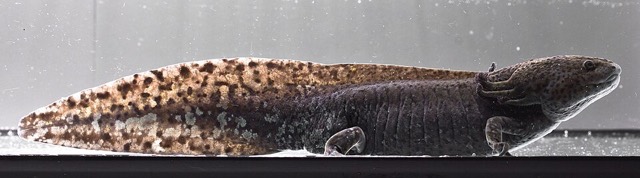 AxolotlAdult life, with the feathery gills still attached.Ambystoma mexicanum ↗
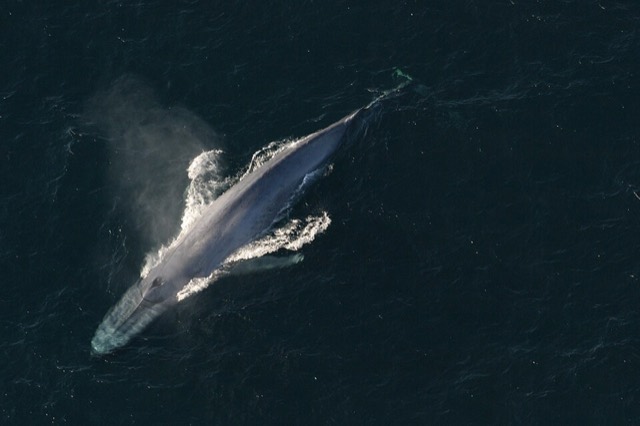 Blue whaleA giant with a very small menu.Balaenoptera musculus ↗
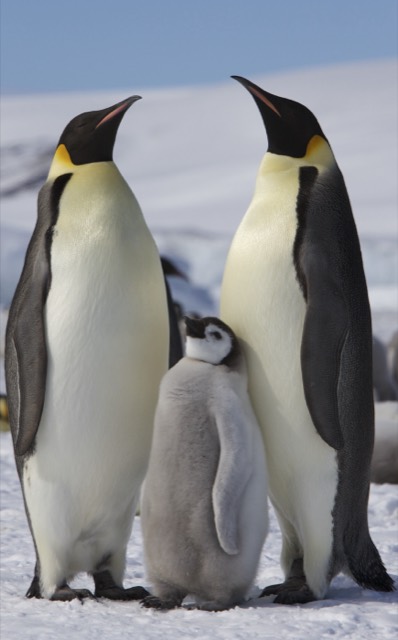 Emperor penguinThe egg has no nest. Dad brings the warm floor.Aptenodytes forsteri ↗
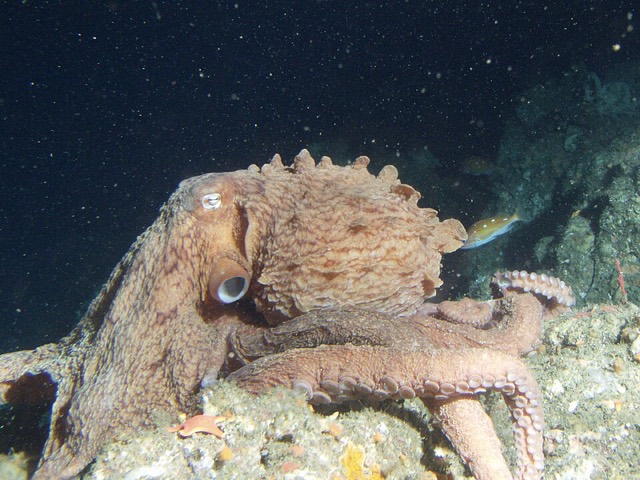 Giant Pacific octopusEight arms. A hidden beak. A very different way to be a mollusc.Enteroctopus dofleini ↗
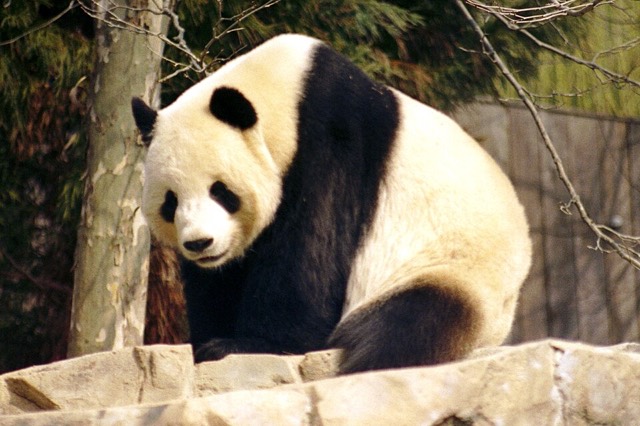 Giant pandaThe bamboo grip starts in the wrist.Ailuropoda melanoleuca ↗
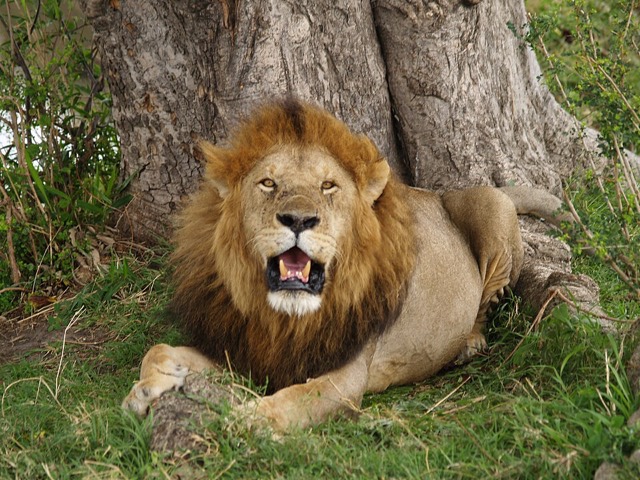 LionMeet the cat that makes family life a team sport.Panthera leo ↗
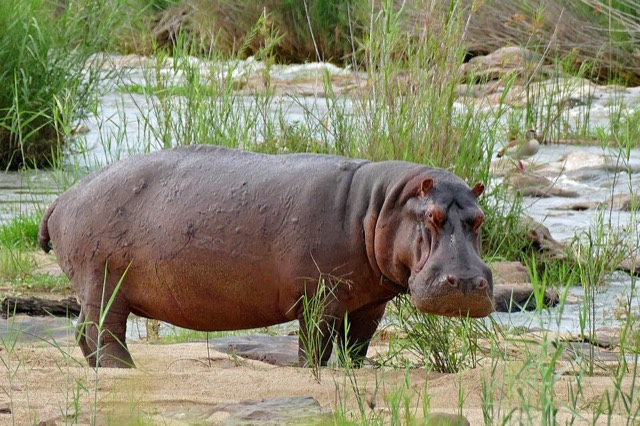 Nile hippopotamusThe “river horse” has a surprising family tree.Hippopotamus amphibius ↗
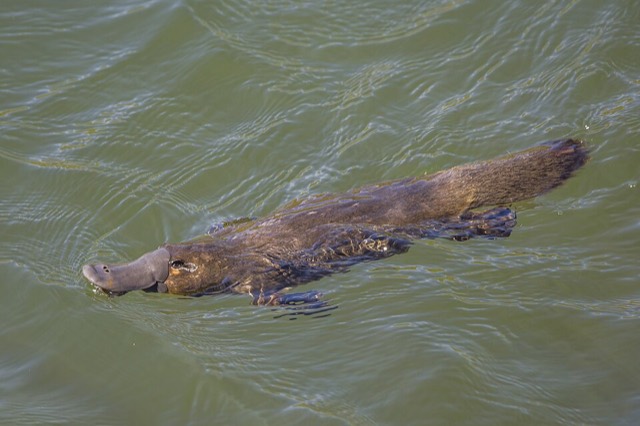 PlatypusEyes shut. Dinner detector on.Ornithorhynchus anatinus ↗
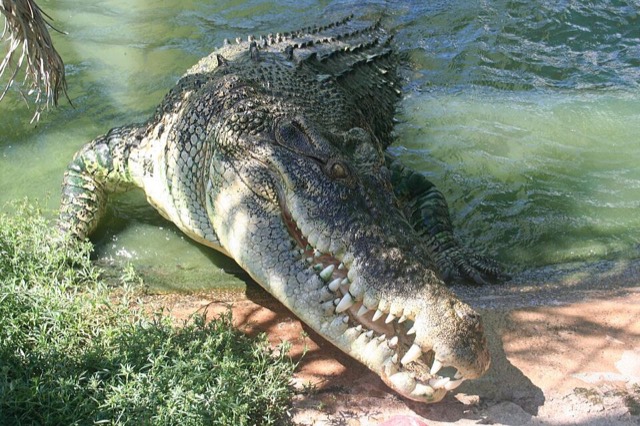 Saltwater crocodileIts name says saltwater. Its range says more.Crocodylus porosus ↗
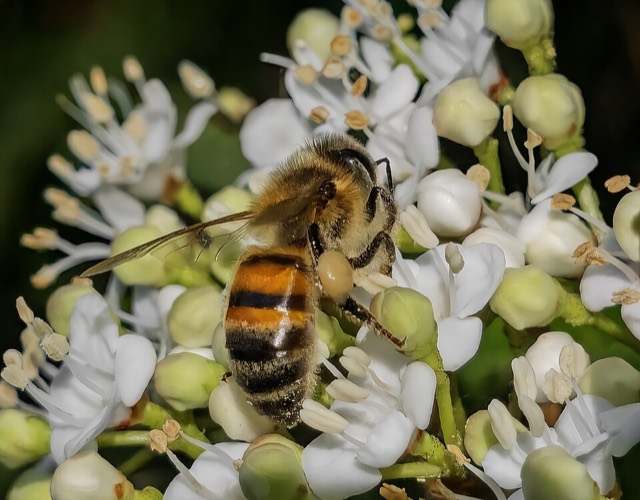 Western honey beeA flower patch can become a set of dance directions.Apis mellifera ↗
Whales and hippos. Hyenas and cats. Discover unexpected relatives through short reads, clear explanations, and sources you can follow.
FOLLOW YOUR CURIOSITY
Find an animal, discover an adaptation, then play a little. Each profile links to its evidence.
No profiles match. Try another common or scientific name.
THE ANIMAL FILES
Sepia officinalis
Eight holding arms, two reaching tentacles.
The common cuttlefish combines an internal shell with a highly changeable exterior. Its arms hold prey, specialized tentacles reach for it, and skin can change pattern and texture. Each part answers a different question about how a soft-bodied hunter feeds, hides and escapes.[1]
Follow the evidence ↓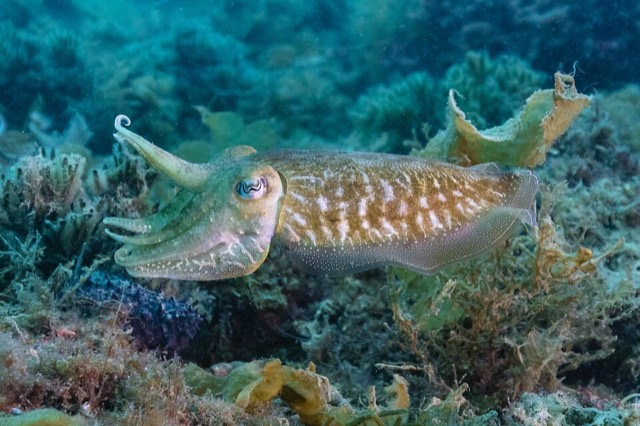
Eight arms surrounding the mouth manipulate and hold prey, while two specialized feeding tentacles help capture it. The beak and radula then process food. Counting appendages is useful, but their functions add more information: reaching, holding and breaking food apart are separate tasks rather than interchangeable uses of one generic tentacle.[1]
Pigment-bearing and light-reflecting structures contribute to camouflage. Muscles can also change skin texture, adding a three-dimensional component to the disguise.[1]
Camouflage can keep a predator from locating a cuttlefish in the first place. If discovered, the animal can use its siphon to jet away and may release ink. These defenses work at different stages of an encounter. A concealed animal and a rapidly escaping one can be using parts of the same defensive repertoire.[1]
A COMMON MIX-UP
No. The cuttlebone is internal. The visible outline alone does not reveal every supporting structure in a mollusc.[1]
TRY A LITTLE REASONING
It can change patterns and texture. Arms, tentacles and the general body plan provide additional clues that are less dependent on its current display.[1]
Adapted and translated from the cited Wikipedia revisions, with source-linked reasoning. Image credit and licence are listed separately above.
Adapted and translated from Wikipedia contributors; exact revisions are linked below. CC BY-SA 4.0
Last fact check:
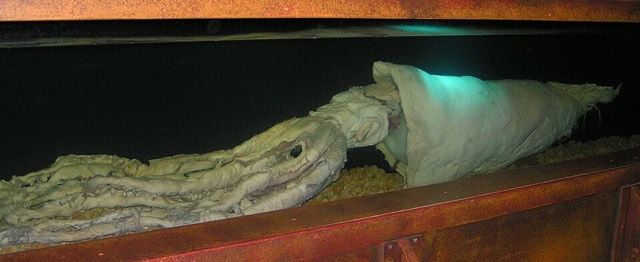 Giant squidTwo long tentacles catch; eight arms bring the catch to a beak.Architeuthis dux ↗
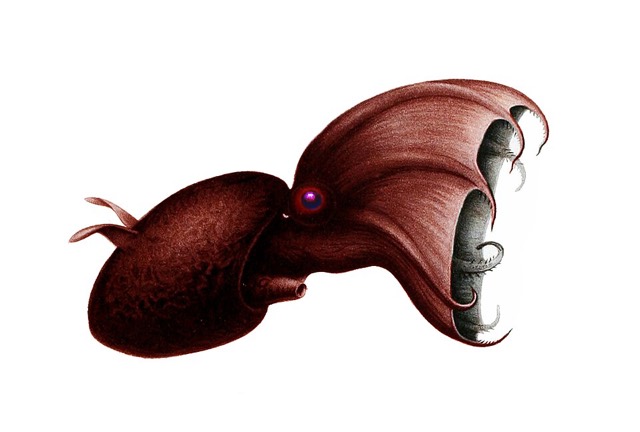 Vampire squidThe “vampire” collects sinking scraps instead of drinking blood.Vampyroteuthis infernalis ↗
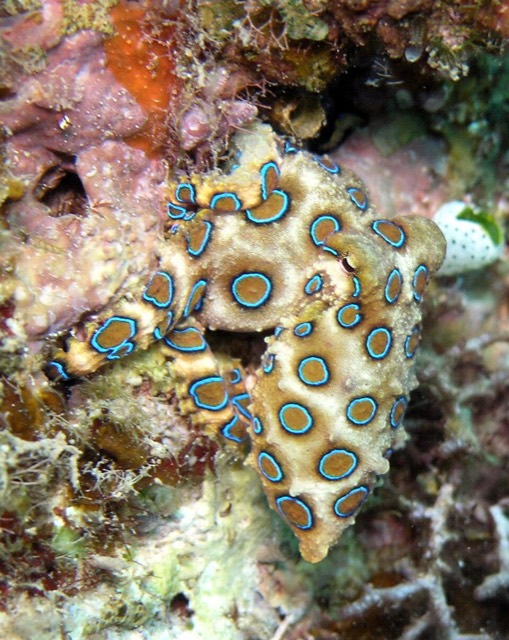 Greater blue-ringed octopusBright blue can be revealed by opening folds in the skin.Hapalochlaena lunulata ↗
A LITTLE NATURAL CURIOSITY
Choose a game: follow family-tree clues, identify an animal photo, compare relatives, sort by weight, or solve a logic grid. Every game supports unlimited rounds.
Open the animal guessing game. Search a local common name or scientific name, then choose an animal. On a phone, tap a suggestion to guess immediately; on desktop, select an animal and submit. Every accepted guess uses one of your 20 chances. A wrong guess reveals a shared ancestral branch; use that clue to choose your next animal.
Identify an animal in five attempts. Start with a clearer pixelated photo; the final three attempts show the full photo. Finish a round and play again immediately.
Search for a name and choose an animal. You have five chances: each guess or skip uses one. Unknown or repeated guesses do not use a chance.
Test my eye for detailCompare two animals and choose which is more closely related to the animal in the question. Each game contains five comparisons, with explanations and NCBI sources. Finish one game and start the next.
Your choice is locked when you answer. Read the explanation and its NCBI links, then continue when you are ready. There is no timer.
Test my instinctArrange four animals from lightest to heaviest, then check once per round. Each game has three rounds; after the result, start another game immediately. Answers use sourced adult weight ranges that do not overlap within a round. Progress stays in this browser; shared results do not reveal the animals.
Let me rank themTap to place an animal. One per row, column and region; no animals may touch, even diagonally.
Use Exclude to mark a square with ×. Tap again to clear it. Undo takes back one action, and a reset can be undone too. Every board has one solution reachable by deduction. Finish a board to start the next; rounds are unlimited and progress stays in this browser.
Solve this boardAfter your first guess, an available branch hint costs three chances. It reveals the next ancestral branch, without naming the answer or revealing a species or a narrower group. When only three chances remain, taking a hint uses them all and ends the round. You can also choose to reveal the answer and finish the round.
The tree follows NCBI Taxonomy, including groups without a formal rank. Branches show classification, not a similarity percentage or a measured time since divergence. Wikipedia may use a different classification.
You must guess the exact catalogued animal. Guessing one of its descendants does not count as a correct answer. When the closest shared branch would name the mystery animal, the game shows a higher ancestor to keep the answer hidden.
Every game supports unlimited rounds. Finish a round, then select the next-game button. Animal guessing lets you continue guessing animals. Historical daily statistics remain saved.
No login is needed. Progress, preferences, and statistics are saved with localStorage in this browser. They do not sync between devices or browsers, and clearing site data removes them. See the privacy and source notes.
Browse the field guide for animal names, classification, reading, and source links. Wikipedia excerpts and adaptations identify their source revision and CC BY-SA licence. Image credits link to the creator, original source, and individual licence; check those terms before reusing an image.
NOTES ON THIS EDITION
These notes explain game storage, external links, and the sources behind AnimalLoop.
Game progress, preferences, and daily statistics stay in this browser’s localStorage; saved-game storage is not sent to PostHog and does not sync between devices. Clearing site data removes these records. We use PostHog with an anonymous browser identifier to collect key interaction events and sampled session replays, with input contents masked. PostHog may store that identifier in your browser and receive basic device and request information. We respect browser Do Not Track preferences when provided.
Some images load from Wikimedia Commons. Its servers receive normal request information, including your IP address and browser request headers. Following a source link opens an external website, which follows its own privacy policy. See the Wikimedia privacy policy for its practices.
Classification follows NCBI Taxonomy. The game uses the catalogued lineage, including unranked groups, to connect guesses. It does not measure visual resemblance or genetic similarity, and other sources may use different classifications.
Wikipedia excerpts and adaptations retain a link to their source revision and credit Wikipedia contributors under Creative Commons Attribution-ShareAlike 4.0. Images have individual licences and creator credits in their field notes; not every image uses the same licence. The local image credits and profile image credits list bundled media sources.
Read the game instructions, explore the field guide, or start an animal guessing game.